What the TikTok Pixel Sends From a Website, Decoded From Its JSON Events
The TikTok Pixel doesn’t send a short query string like the older pixels. It posts a JSON document to analytics.tiktok.com/api/v2/pixel, with the event, the page and the visitor nested inside it. Reading one by hand means picking through braces. PXTA flattens the JSON into dotted field names, so context.page.url reads as one row in the report.
TikTok ads sell well for shops and service businesses alike, so the pixel turns up on sites that never had a social ad tag before, often pasted in by whoever ran the campaign.
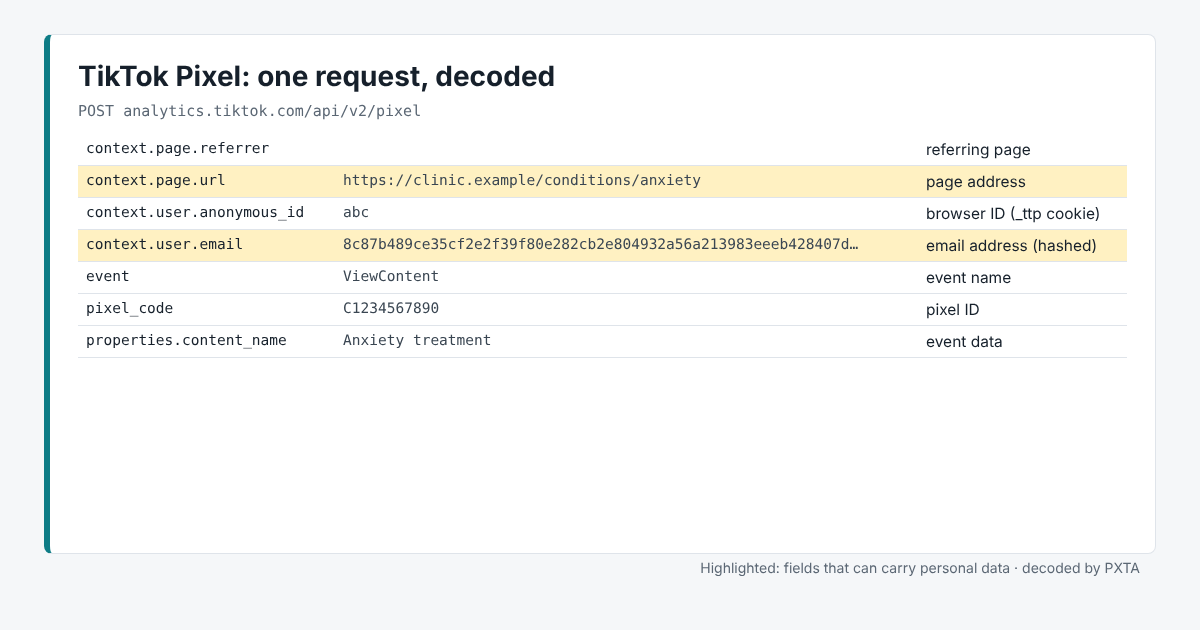
The Fields That Matter
pixel_codeis the pixel ID andeventis the event name, such asPageview,ViewContentorCompletePayment.context.page.urlis the page address andcontext.page.referrerthe page before it.context.user.anonymous_idcomes from TikTok’s_ttpcookie.context.user.email,context.user.phone_numberandcontext.user.external_idcarry hashed customer details from advanced matching.properties.fields carry event data the site adds, such as a product or content name.
Where It Usually Goes Wrong
Event data that names the page’s subject. In the image above, properties.content_name says “Anxiety treatment”. The page address already gives that away, and the event data says it again in plain words. PXTA’s sensitive-page rule reads page addresses, referrers and titles, so it flags the address here; the email, phone, name and search rules run on every event field, including ones like this.
Automatic advanced matching. TikTok can read email and phone fields from the page by itself, hash them, and add them to events. PXTA’s marker address in email fields shows whether that’s happening.
Banners it doesn’t know about. A pixel pasted directly into the page runs regardless of the cookie banner. In the Cedar Valley Clinic sample, TikTok sent condition pages in all three passes while Google Analytics waited properly.
What PXTA Can’t See
TikTok’s Events API takes the same events from a site’s server. That data never passes through the browser, so a clean browser report doesn’t rule it out.